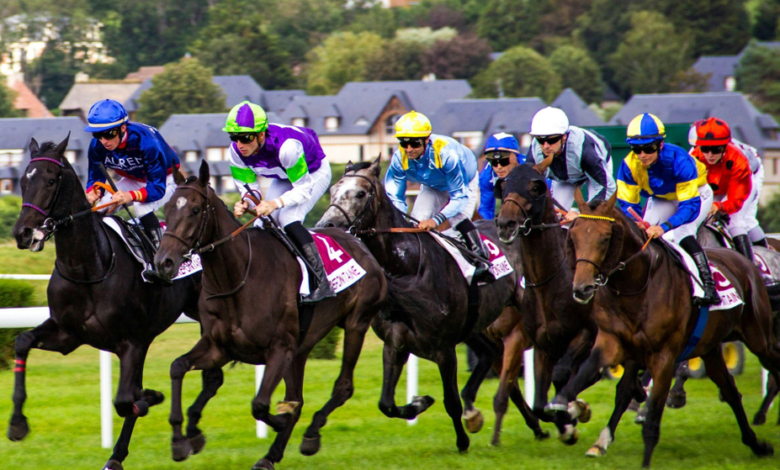
Anyone who has spent years collecting combinations for Quinté+ eventually notices that many of the season’s high-profile races take place outside of France, where the betting rules are completely different. In this article, let us figure out how betting on a foreign race differs from the usual one and what to check before entrusting your money to an international bookmaker.
One Horse, Two Ways to Price It
In France, horse racing bets always go into a common pool, as the 2010 law permits pari-mutuel betting exclusively here, including online. The final odds become known only after betting is closed, once mandatory deductions are subtracted from the pool and the remainder is distributed among the winners. This means bettors cannot know their exact potential return when placing a pari-mutuel wager. The number on the scoreboard five minutes before the start remains merely a guideline, since late large bets can noticeably shift it.
A fixed-odds bookmaker works differently, as the price is locked in at the time of the bet and no longer depends on the behavior of other players. This model is familiar to British and Australians, and fans of foreign races often open accounts with international operators for this very reason. It is more convenient to choose among them through specialized catalogs like Bookmaker-Expert.com/ES/, where the Spanish language section gathers a rating of international betting sites with scores on a ten-point scale. The “Excelente” status is awarded there to operators who resolve all player complaints or do not receive them at all.
The ratings themselves take into account round-the-clock support, the mobile version, market selection, security, and bonus transparency. For a racing fan, the width of the line usually turns out to be decisive, especially when the horses are running on another continent.
Where the Big Days Are Run
Each year, the International Federation of Horseracing Authorities publishes a list of the top one hundred Group 1 and Grade 1 races, with the race rating calculated based on the first four finishers. The 2025 list included 20 British races, 19 Australian, 16 American, and 15 Japanese, while the title of the best race in the world was shared by the Japan Cup and the British QIPCO Champion Stakes.
Along with the racecourse, the betting acceptance model changes as well.
| Event | Venue | Usual timing | Home betting model |
| Prix de l’Arc de Triomphe | ParisLongchamp | First Sunday of October | Pari-mutuel only, by law |
| Royal Ascot | Ascot | Mid-June, five days | Fixed-odds bookmakers plus Tote pools |
| Kentucky Derby | Churchill Downs | First Saturday of May | Pari-mutuel pools |
| Melbourne Cup | Flemington | First Tuesday of November | TAB tote plus corporate bookmakers |
| Hong Kong Cup | Sha Tin | December | Hong Kong Jockey Club pools |
From this comes a curious nuance, as an international bookmaker often gives fixed odds on French races, although at home they are accepted only into the pool. One way or another, the exact same horse costs differently depending on where the bet on it is placed.
Bets That Lose Something in Translation
Quinté+ remains a purely French invention, yet every betting school has its signature formats. In Great Britain and Ireland, each-way is considered a classic, meaning two identical bets for a win and for a place. The place part is paid at a quarter or a fifth of the odds, and the number of places depends on the field size, so in handicaps of 16 participants or more, even fourth place is usually counted.
In the US, the logic is closer to the French, because bets there are also accepted into pools. Exacta requires guessing the first two in exact order, trifecta three, and superfecta four, so a fan of tiercé and quarté will find these mechanics familiar. The order of finish determines whether these bets pay out.
Special attention deserves Best Odds Guaranteed, which many British bookmakers offer on British and Irish races, meaning if a horse’s starting price turns out to be higher than the taken one, the winnings will be recalculated according to it. The conditions still vary, and the promotion does not always apply to foreign races.
A Checklist Before the Stalls Open
Before opening an account for the sake of foreign races, we advise you to go through a short list:
- License and the match of its number with the regulator registry;
- Race coverage, each-way terms, and the availability of Best Odds Guaranteed;
- Account currency and top-up methods without unnecessary conversion;
- Bonus wagering requirements, which may mean rolling over the same amount 10 to 20 times;
Support operation at night and early morning when horses are running in Australia and Japan.
Many operators focused on Europe operate under a Maltese license, and its authenticity is verified through the MGA Licensee Register. Moreover, the regulator regularly warns about sites posing as its licensees, so a logo in the footer proves nothing by itself.
By the way, age will also be checked, as the threshold is almost everywhere 18 years, and you will have to confirm it with a photo document. It is equally important to find out in advance whether the law of your country allows betting with foreign operators and immediately set deposit limits.
Final Furlong
Racing on different continents is much more similar to each other than the betting rules on them. Knowing the mechanics of pools, each-way, and Best Odds Guaranteed, a Quinté+ fan confidently moves from Chantilly to Ascot and Flemington. Thus, a successful bet on a foreign race starts not with choosing a horse, but with understanding the system by which it is evaluated.